Close
.png)
Nostalgia marketing has captivated the internet over the past few years, and brands have helped to create this as a movement in itself. There’s a clear bridge between the energy of the past and the possibilities of the future - and nowhere more visible right now than in AI and tech brands.
In the 90s, the walls of my bedroom were plastered with rave posters and music artwork (something I touched on recently on LinkedIn). Neon colours, bold typography, geometric shapes, human elements mixed with bionic and technological components, patterns and eccentricity.
These weren't just decorations for me - they were a glimpse into a world that felt alive, futuristic, and full of possibility - and that bold, forward-thinking design is what drove me to work in the creative industry.
Back then, I worked on various big consumer brand campaigns - now I focus more on B2B, especially tech - and when I look at what companies in this space are producing, I often see something that takes me back.
Futurism, retro-futurism and neo-futurism
Futurism is about imagining the future through design, using movement, speed, and innovation, all translated into visuals - and two strands have evolved from it that are particularly relevant to what’s happening in tech marketing right now.
Retro-futurism looks at how past eras imagined the future and what happens when those visions resurface in modern design. Think about 90s rave culture: the neon, the geometry, the bionic imagery. Those designers were creating a visual language for the future that hadn’t arrived yet. When today’s brands bring that aesthetic into their designs, they’re tapping into retro-futurism by looking back to a past vision of the future that still carries the energy and positivity of that original era.
Neo-futurism builds on these ideas with technology-driven layers, geometric shapes, experimental typography and bold colours - but it’s forward-looking. It’s less about referencing the past and more about pushing into new territory.
90s music culture as a design playground
In the 90s, this style thrived in music culture, shaping club flyers, album covers, and digital art (of which I collected a lot). These styles defined the look and feel of 90s rave culture into mid-decade jungle and the later drum & bass. These visuals weren’t just about selling music… they created an identity, a culture, a feeling.
Retro-futurism and neo-futurism in AI and tech today
If you look back to the graphics that ruled the scene, and then what we see today, you will recognise a striking resurgence of these aesthetics - particularly in AI products and tech marketing.
Startups and tech brands, maybe unintentionally, are drawing on 90s-inspired visuals: bold gradients, geometric shapes, experimental typography, and a sense of movement and energy. Some of this is neo-futurist - genuinely pushing design forward with new styles, tools and techniques. But a lot of it is retro-futurist - whether consciously or not - it’s leveraging a visual era that already imagined this kind of future.
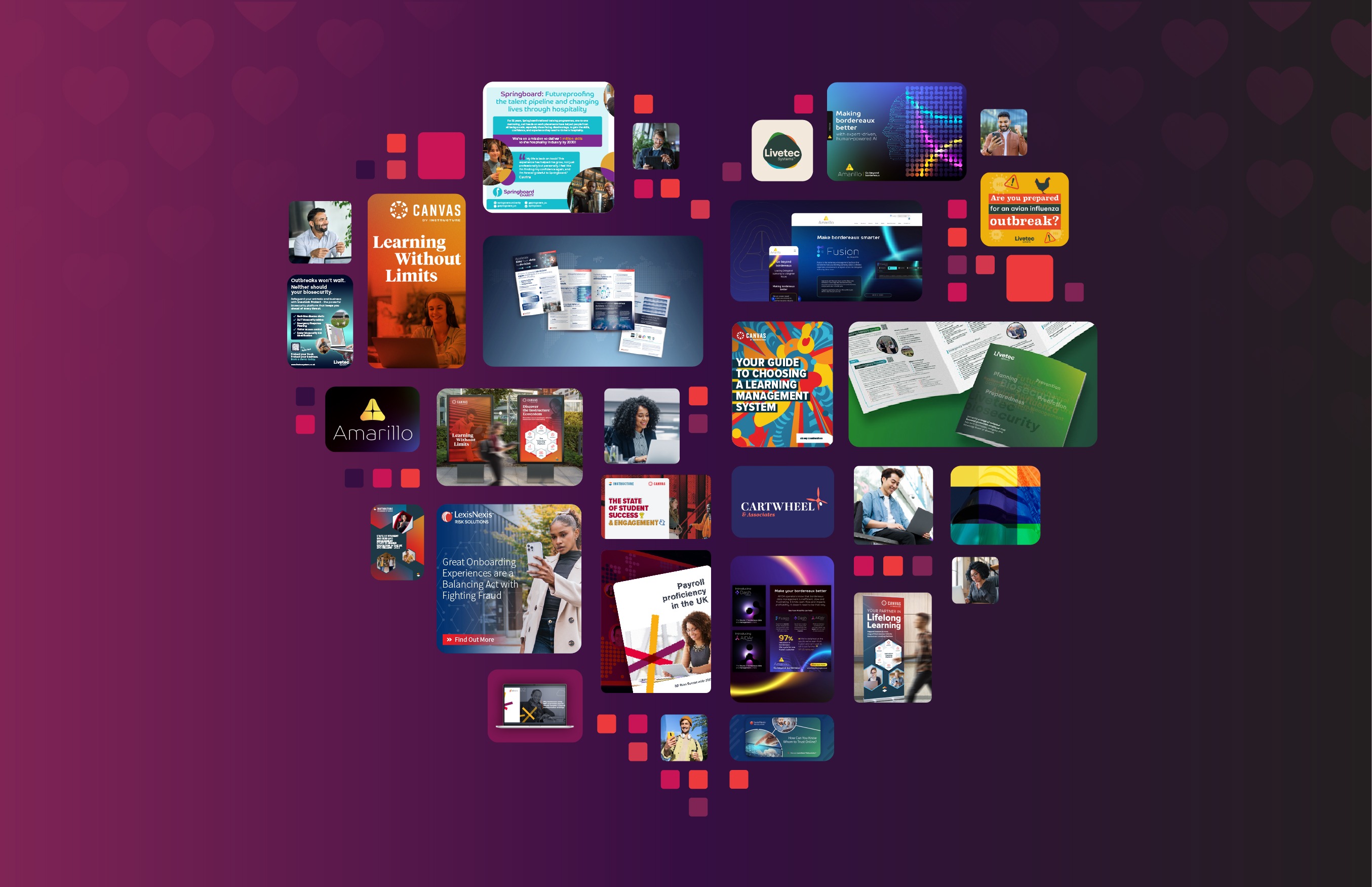
The campaign assets I’m seeing now are adopting these colour palettes, layouts, and motion that pull from this era. The waves, the human elements, the boldness with the bright light.
And it works, because it connects with those who lived through it and feel genuine nostalgia while simultaneously signalling innovation. It also connects with a younger generation who didn't experience it originally, but are drawn to the aesthetic anyway. The artwork then looked like the future, and it still does now.
Some of the work we do for our clients is reminiscent of this design style. We use the dark, bold colour palettes with bright accents, and for others, we bring in human-to-data elements coupled with those bionic and technological components and layers to bridge the gap between leading technology solutions and the impact on the people using them.
There’s a story in every graphic we produce. Much like there was on those flyers and posters, album covers and record sleeves back in the 90s.
Why designers and marketers should pay attention
Design cycles don’t just repeat… they evolve. And right now the visual language of 90s futurism is doing something truly interesting: it’s giving AI and tech brands a way to feel both cutting-edge and emotionally familiar at the same time. That’s a rare combination in a category where most marketing defaults to cold, clean minimalism.
For brand leaders and marketers working in this space, it’s worth understanding where these aesthetics come from - not just recycling them. There’s a difference between borrowing a gradient because it’s trending and building a visual narrative that connects your technology to something people genuinely feel. The brands that understand this distinction are the ones producing work that stands out.
Interested in chatting about working on something together? Drop me a line at ap@made.agency.